
Orkney’s history: Beyond the guidebook myths
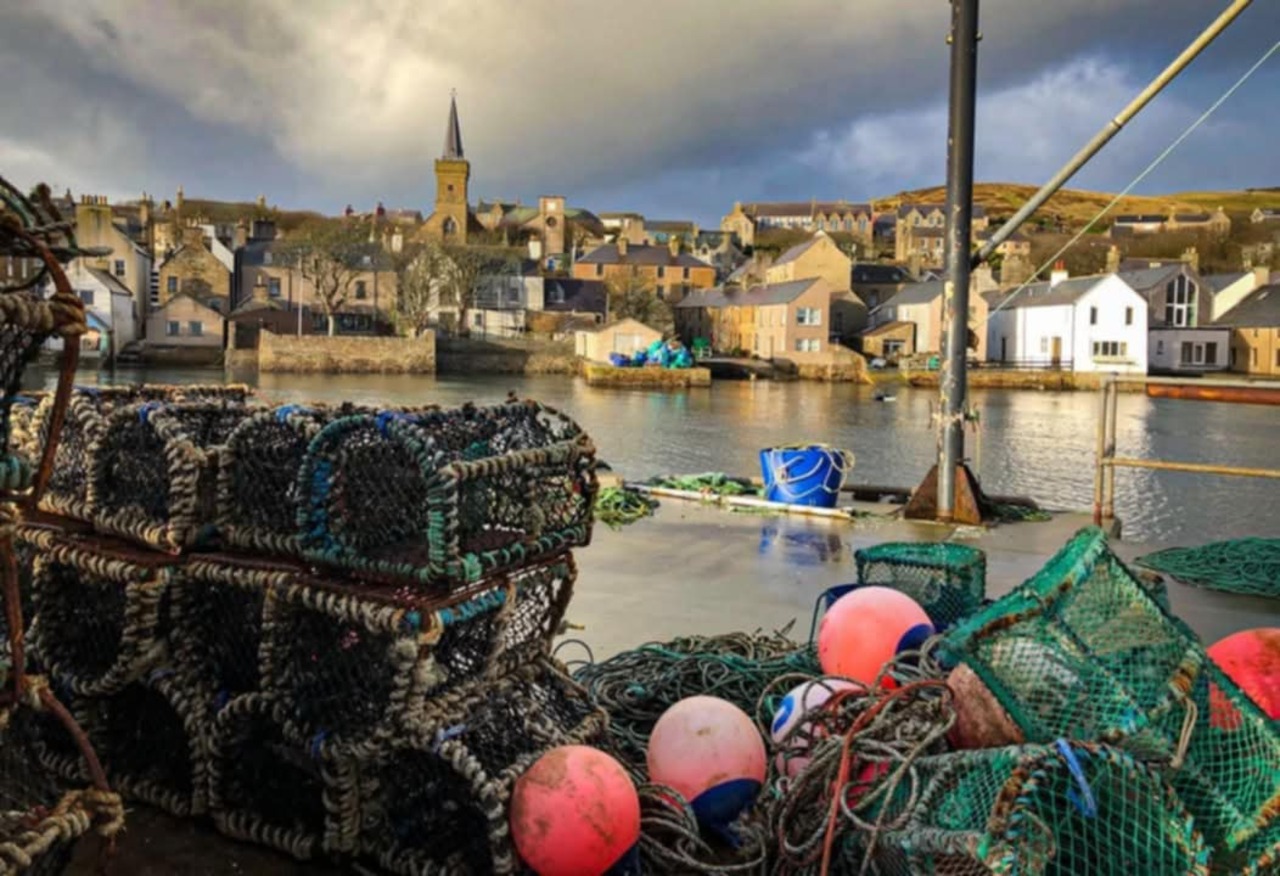
Understanding our past is less about memorising dates and more about recognising patterns. Settlement choices, coastal landing spots, and even the way we orient our farm buildings today echo decisions made millennia ago. Above all else, I am an Orcadian first and Scottish second; these islands are my home and my absolute passion. A point of clarity: my service covers all of Scotland, but I am a driver and host for those wider road journeys. I am not a castle tour guide for places I don’t call home. My true expertise belongs entirely to Orkney’s Neolithic and Viking age history, landscape, and future. I am fully insured and legally permitted to tour across all of Europe, but frankly, driving on the other side, not the wrong side, is just a bit too much for me. I will happily take you to the Owl Mountains in Poland, but I will never pretend to be Polish. I am a guide, not a shapeshifter. Here, as a dedicated full-time local Orkney tour guide, I speak from a lifetime of being part of the fabric of the Islands.


Early settlement and deep time
Evidence of human activity in Orkney extends far beyond the popular Neolithic narrative. Archaeological discoveries show movement through these islands during the Mesolithic, proving our relationship with this land is deeper than standard textbooks claim. We aren't a sudden flowering of civilisation; we are the result of a long, evolving persistence. Every new find refines the story. Take the sandstone head discovered on Rousay last year; it shares an almost identical, uncanny likeness to the medieval carved head hidden away up in the window frame of St Magnus Cathedral in Kirkwall, a hidden detail you literally need a ladder to see. History isn't static; it’s a process of constant rethinking, which is exactly why I stay buried in books. When mapping out your Orkney multi-day tours, digging into this deep time perspective changes everything you see underfoot.
The neolithic powerhouse
Five thousand years ago, give or take a few centuries, Orkney was the beating heart of the British Isles. We were the innovators spreading architecture, stone engineering, and cultural traditions across the UK. Sites like Skara Brae, Maeshowe, and the Ring of Brodgar weren't just ceremonial spots for the sake of it; they were part of a connected, domestic reality. For those stepping off a ferry or booking comprehensive Orkney tours, visiting places like Westray, Rousay, Hoy, or Sanday reveals that this monumental stone movement wasn't confined to a single mainland valley; it encompassed the entire archipelago.
What physical details in the stonemasonry prove true Neolithic craftsmanship?
Seasonal guides point at a wall and call it ancient, but true insight comes down to assessing the exact bedding planes, grain quality, and quarry source of the flagstone itself. The Neolithic builders did not just pick up random rocks; they selected specific layers of Rousay flagstone from coastal outcrops where natural weathering had already split the stone into perfectly parallel, flat slabs. At sites like Skara Brae or Maeshowe, you can point out where builders deliberately placed weaker, cross-grained stone in low-load areas while reserving the finest, dense beachfront flagstone for critical lintels and hearth dressers.
Recognising where stone was quarried and why a specific slab has survived five thousand years without spalling shows an understanding of structural physics rather than a memorised script. To evaluate quality yourself, examine the grain and thickness of the flagstone to see where dense slabs were chosen for primary load-bearing structures, and trace how ancient builders quarried high-grade stone directly from local coastal beds where natural fault lines created smooth, flat masonry.
The Norse earldom
From the late eighth century, the Norse reshaped these islands, but they didn't walk into a vacuum. They landed in a place that already had a deep pulse. Orkney became the central seat of a powerful maritime Earldom, connected through northern sea routes stretching to Nidaros, Dublin, and Iceland. On our dedicated Viking tours of Orkney, we move past the romanticised Hollywood caricatures to study real Norse archaeology, drinking halls, Earls' strongholds, and coastal boat slips. The Orkneyinga Saga gives us a dramatic narrative, but you don't truly understand this era by reading a book alone; you understand it by reading the soil. When we are out on the ground, we trace the old trails down by the shoreline, searching out original coastal paths. It takes a trained eye to look past modern infrastructure; so many of our current main roads were actually laid down in a hurry by the military during wartime, completely burying routes that had been walked for a thousand years since King Olaf's fateful visit.
From Norway to Scotland: Udal law and land rights
In the fifteenth century, political authority shifted to Scotland via a royal dowry. But culture doesn't switch off like a lightbulb when a treaty is signed. Norse influence remains deeply embedded in our dialect, our farming traditions, and our place names. Our Udal law remains unique to Orkney and Shetland to this day, a stubborn reminder of where our roots actually lie.
Derived from old Norse legal traditions, these ancient title deeds contain quirks that still baffle outside official types, establishing absolute land ownership directly under God himself, with no feudal overlord. Practically, it means local farmers hold direct rights over their own peatbanks and own the foreshore all the way down to the lowest low-water mark, completely contrasting with standard Scottish common law. Unravelling these distinct legal quirks is part of what a local Orkney tour guide brings to the surface.
How Udal law affects land access and foreshore rights in Orkney today
Unlike standard Scottish common law, where the Crown owns the foreshore, Orkney’s ancient Norse Udal law guarantees direct ownership down to the lowest low-water mark. A clear real-world example of this legal distinction played out in recent years with land access across the causeway to the island of Hunda. Under Udal principles, traditional access routes, foreshore rights, and land use operate outside standard feudal assumptions, causing endless head-scratching for outside authorities trying to apply mainland rules.
Understanding Udal law is not an academic exercise; it dictates who actually holds rights to the shore, the seabed, and the tracks crossing private island ground today. Because land and foreshores are held under Udal title, visitor access to places like Hunda relies directly on traditional local rights and direct landowner relationships rather than standard mainland public access codes.
The Scottish era and island survival
The shift to Scottish rule brought centuries of political friction, land clearings, and the heavy-handed rule of the Stuart Earls, who built their grand palaces in Kirkwall and Birsay by squeezing the local population dry. Yet the core of Orkney stayed intact. The people simply absorbed the pressure, kept their heads down, and maintained their ancient working way on the land and the sea. The architecture changed, and new names filled local registers, but the underlying machinery of island life resisted conversion. When factoring these historical layers into your broader Orkney tours, the resilience of the locals becomes crystal clear.
Modern Orcadians: independent mindsets and uncomfortable truths
Some customs still match the fiercely independent streak of the locals. It is no accident that J.R.R. Tolkien found such distinct inspiration for the Dwarves of Erebor; he clearly met his fair share of disgruntled, hardy Orkney farmers who share that same uncompromising, subterranean, and fiercely independent spirit. When people here decide to excavate land or clear a ditch without modern permission, things tend to get generationally interesting very quickly. Today's Orcadians are the direct line of that survivalist mindset: pragmatic, dryly humorous, and quietly protective of a home that has survived every incoming wave of history.
As a native Orkney tour guide, I hold a deep sense of pride in our guardianship of these islands. The ultimate goal for any of us living here is simple: to keep this land in good order and hand it over intact to the next generation in one piece. That responsibility comes with being completely honest about where we stand today. Mass tourism is unfortunately not always a good thing for small island communities, and over time, plenty of things have happened here that weren't good.
Take our energy situation, for example: Orkney generates well over 100% of its electricity needs through wind, wave, and tidal power and on paper we are completely self-sufficient in green energy, yet local residents pay the second most expensive electricity tariffs in the entire country due to national grid structures. I won't insult my clients' intelligence by greenwashing a single thing about island life, and that is a promise. You get the real story: the brilliant archaeology, the hard realities, the local politics, and the generational grit required to make a life on these islands.
How weather cancellations reveal the true Orcadian mindset
When a heavy North Atlantic blow rolls in, outside tour operators and recent move-in guides panic, firing off mass cancellation emails the second the rain hits sideways. That reactive mindset misses the entire reality of island life. Weather is not a crisis in Orkney; it is simply the backdrop. How we orient our farm buildings today echoes decisions made millennia ago, usually driven by whichever direction keeps the gale from blowing your door off its hinges, or leaving you with a permanent North Atlantic haircut that looks suspiciously like a sideways mohawk.
While newly arrived guides bravely turn their tails and flee pulling a classic Sir Robin from The Holy Grail the second conditions fail to match a sunny brochure, local guides who have lived here for decades simply shift tactics. We swap another experience and leave the exposed stuff for tomorrow, or a sheltered chambered cairn, a historic workshop, or a quiet inland valley. A gale only ruins a tour if the person driving the vehicle lacks the local knowledge, connections, and stubbornness to work with the Atlantic rather than bravely run away. When ferries or weather disrupt plans, an established guide adjusts the itinerary in real time, utilising intimate knowledge of the terrain to keep the day running smoothly regardless of Atlantic gales.
A living historical landscape
What distinguishes Orkney is how the past remains visible in everyday life. It’s in the field boundaries, the shoreline ruins, and the way the stone farmhouses lean against the Atlantic wind. It’s a sequence of cultures from a prehistoric capital to a Norse maritime hub that explains why this place feels like nowhere else on earth. The more useful question isn't "what happened here?" but "how does it still shape us?" Orkney tendsto stay with people in ways that are difficult to explain.
In the aim of brightening your day, and mine.